

Key Takeaways
- CurriculumTrak is sunsetting in December 2027. Schools should confirm their migration schedules and requirements.
- Schools should review existing curriculum maps, lesson plans, standards and instructional resources before making a move.
- A software transition is an opportunity to improve curriculum mapping and management practices.
- Modern curriculum mapping software should connect curriculum plans, lesson planning and standards alignment.
- Edusfere facilitates migration from CurriculumTrak for K-12 schools with their connected platform for curriculum mapping, lesson planning and overall curriculum management goals.
As CurriculumTrak nears a sunset in December 2027, it leaves K-12 schools with an important decision to make. Which CurriculumTrak alternative should they move to for their curriculum management needs? For school leaders, this decision involves more than replacing software. It affects how teachers plan lessons, how curriculum directors monitor standards alignment and how administrators maintain academic records.
A platform transition also creates an opportunity to review existing curriculum mapping practices. Schools can identify gaps, organize instructional resources and find better ways to manage curriculum across grades and subjects.
Rather than treating the transition as a routine software replacement, school leaders should consider what they need from their next curriculum management platform. The right choice should support everyday teaching and make academic planning easier to manage.
Today’s blog explains what K-12 schools should review, how to prepare for a transition and what to look for in a modern curriculum mapping software. It also explores how Edusfere can support schools looking for a more connected approach to curriculum planning and management.
What Does the CurriculumTrak Sunset Mean for K-12 Schools?
CurriculumTrak has announced a transition to Atlas for schools, another curriculum management platform from Faria Education Group.
According to CurriculumTrak's published transition information, migrations began in Spring 2025, with the aim of completing all school migrations within three years. The provider also describes a migration period of approximately two to four weeks, including a temporary pause on new data entry in CurriculumTrak.
Individual schools may have different migration schedules. Administrators should contact their provider to confirm their transition dates, data arrangements and next steps.
For existing users, the transition raises several practical questions. What happens to current curriculum maps and lesson plans? Will teachers need to learn a new system? Can schools explore other curriculum management platforms before making a decision? How can they avoid disrupting academic planning? These questions deserve attention well before a school's scheduled transition.
Importantly, schools do not have to view this as a simple platform upgrade. They can also evaluate whether another curriculum mapping solution better supports their academic goals, teaching practices and administrative requirements.
Why Should Schools Start Replacing CurriculumTrak for Curriculum Management, Now?
A curriculum management system supports how schools organize, document and review what students learn. Changing that system affects more than the technology. It can influence everyday teaching workflows and the way academic information is shared across departments.
Delaying the decision may leave schools with limited time to review their options, organise existing records and prepare teachers. It can also make it harder to identify outdated documents or gaps in curriculum coverage before moving to a new platform.
Planning early gives school leaders time to review existing curriculum maps, identify important instructional resources and assess whether current standards alignment reflects the school's academic goals. It also allows administrators to compare software options, understand onboarding requirements and plan the transition around the academic calendar.
This review should go beyond asking whether the next platform offers the same features as the existing one. School leaders should consider whether their current approach to curriculum management is working effectively.
For example, can curriculum directors easily see what is being taught across grades? Can teachers connect lesson plans to broader learning objectives? Can administrators identify gaps without collecting information from multiple spreadsheets?
Answering these questions helps schools define what they need from their next platform. A good starting point is to understand exactly what curriculum information they currently have.
What Should Schools Review Before Moving Their Curriculum Data?
Before selecting a new platform to replace Curriculum Trak, schools should review their existing academic plans, teaching resources and curriculum records. This process, commonly called as a curriculum audit, helps identify what needs to be retained, updated or reorganised.
Not every document needs to move into a new system. Some records may be outdated or duplicated, while others may contain valuable information for future planning and accreditation reviews.
The following table outlines the key areas school administrators should examine.
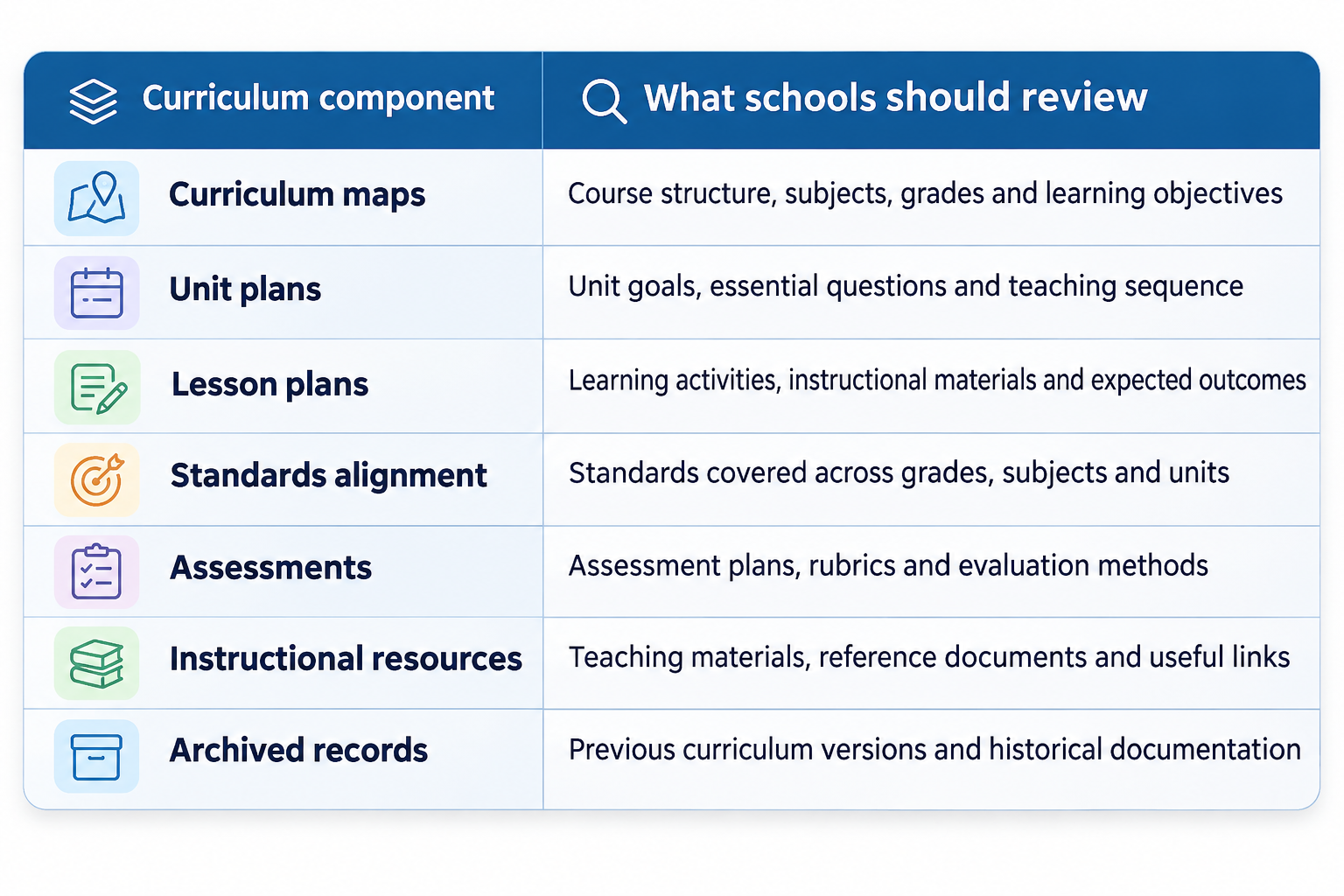
Schools should also check whether these documents are complete, up to date and accessible to the right people. Missing information or inconsistent records can create confusion during a transition. Once the audit is complete, administrators will have a clearer picture of what their next curriculum management system needs to support. This makes evaluating modern curriculum mapping software a much more informed process.
What Should Schools Look for in a Modern Curriculum Mapping Software?
Choosing modern curriculum mapping software requires more than comparing feature lists. Schools need a platform that helps teachers plan instruction while giving academic leaders a clear view of curriculum development across grades and subjects. The following capabilities deserve particular attention.
Curriculum mapping across grades and subjects
The platform should help schools organise courses, units and lessons in a structured format. Teachers should be able to document what they plan to teach, while curriculum directors should be able to review how subjects and grade levels connect.
Standards alignment
Academic standards describe what students are expected to know and demonstrate at different grade levels. Curriculum mapping software should help teachers connect lessons and units to relevant standards.
This makes it easier for schools to identify which standards are covered, which need more attention and where learning gaps may exist.
Connected lesson planning
Lesson planning should support the broader curriculum rather than operate as a separate activity. Look for a software that allows teachers to connect lesson plans with unit objectives and curriculum maps.
This helps maintain consistency between what schools plan and what teachers deliver in classrooms.
Easy access to curriculum resources
Teachers should be able to organize and access instructional materials without searching through multiple folders and spreadsheets. A shared platform can help schools maintain consistent access to lesson plans, curriculum documents and teaching resources.
Collaboration between teachers and administrators
Curriculum planning involves several people across a school. Teachers need room to develop and update their plans, while department heads and curriculum directors need visibility into how those plans align with school-wide goals. The software should support both activities without creating unnecessary administrative work.
Useful reports and curriculum visibility
School leaders should be able to understand curriculum coverage and identify areas that need attention. Reports can help administrators review standards alignment, curriculum progression and planning across grades and subjects.
Together, these capabilities can help schools move beyond maintaining digital documents towards managing curriculum as an ongoing academic process.
Why Should Curriculum Management Go Beyond Storing Documents?
A curriculum management system should do more than provide digital storage for academic documents. It should help schools understand how curriculum plans connect across subjects, grades and classrooms. Two important concepts in this process are vertical and horizontal alignment.
Vertical alignment ensures that learning builds progressively from one grade to the next. For example, students should develop foundational mathematical skills before moving on to more advanced concepts.
Horizontal alignment ensures that students in the same grade receive consistent learning opportunities across different classrooms or sections.
Both are important for a well-organized academic programme. Without a clear view of curriculum planning, teachers may work with outdated documents or follow different approaches to covering the same standards. Curriculum directors may also struggle to identify gaps or inconsistencies across departments.
A shared curriculum management platform can help bring these plans together. It allows schools to review curriculum coverage, identify areas that need attention and support teachers with more relevant guidance.
The goal is not to standardise every classroom experience. Teachers should retain the flexibility to adapt instruction to their students. Instead, schools need a shared understanding of academic goals and a consistent way to document how those goals are addressed.
For schools evaluating their next platform, this distinction matters. The right solution should support both individual lesson planning and broader curriculum oversight.
Is Edusfere the Best CurriculumTrak Alternative For K-12 Schools?
Schools exploring alternatives to CurriculumTrak should consider what they want their next curriculum management platform to accomplish. Replacing existing software is one requirement. Improving how teachers plan and how administrators oversee academic programmes is another.
Edusfere is a curriculum mapping and lesson planning platform designed for K-12 schools. It brings curriculum mapping, standards alignment, lesson planning and accreditation support into one connected workspace. Rather than managing these activities through separate documents and tools, schools can organise their academic planning within a shared platform.
Curriculum mapping across grades and subjects
Edusfere helps schools organise courses, units and lessons across grade levels and subjects. Its Curriculum Hub gives school leaders visibility into curriculum coverage, pacing and planning across classrooms.
Teachers and administrators can work with shared curriculum maps instead of maintaining disconnected versions of academic plans.
Standards alignment
Edusfere allows schools to select relevant academic standards and connect them to courses, units and lessons. School leaders can review which standards are covered, partly covered or missing. This helps curriculum teams identify gaps and assess whether academic plans reflect the school's learning goals.
Lesson planning connected to curriculum maps
Teachers can create structured lesson plans and connect them to broader curriculum objectives. This reduces the separation between lesson planning and curriculum documentation. It also helps schools maintain a clearer record of what teachers plan to cover throughout the academic year.
Curriculum visibility for school leaders
Edusfere gives administrators a central view of curriculum planning across grades and subjects. School leaders can review instructional coverage, monitor planning progress and identify areas that may need additional attention. This makes it easier to support curriculum development without relying entirely on manual updates from individual teachers.
Support for accreditation preparation
Schools often need to demonstrate how their curriculum aligns with academic standards and institutional goals. Edusfere connects curriculum maps, lesson plans and standards alignment, helping schools maintain relevant academic documentation as part of their regular planning process.
For schools considering a move from CurriculumTrak, Edusfere is worth evaluating as an alternative approach to curriculum mapping and management. Its features can help schools organise academic planning and improve visibility across their curriculum.
The right transition process will depend on each school's requirements and existing records. Schools should discuss their specific migration needs and implementation arrangements directly with the Edusfere team.
How to Plan a Smooth Transition to a New Curriculum Management Software?
Selecting a new platform is only part of the process. Schools also need a realistic transition plan that accounts for existing curriculum records, teacher responsibilities and the academic calendar. A structured approach can help administrators manage the change while keeping teachers informed and academic planning on track.
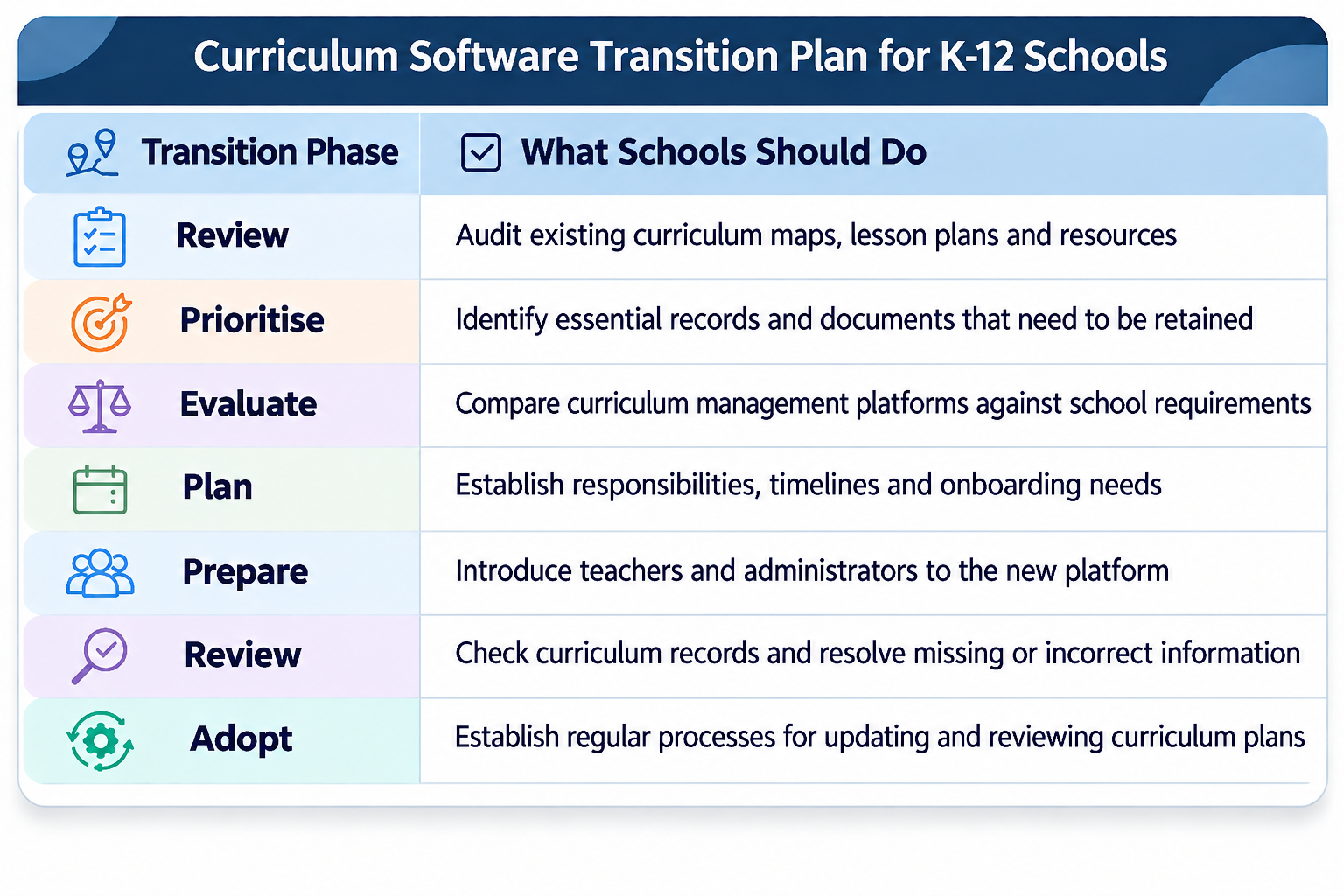
Schools should also consider when the transition will have the least impact on teaching and learning. For example, a quieter planning period may be more suitable than examinations or major curriculum reviews.
Communication is equally important. Teachers should understand why the school is changing platforms, how their daily work may change and where they can get support. Giving staff time to become familiar with the new system can make adoption easier.
Before moving ahead, school leaders can use a simple readiness checklist to ensure that the most important decisions and preparations are covered.
CurriculumTrak Sunset: A Readiness Checklist for School Leaders
A clear checklist can help school administrators track their progress and avoid overlooking important tasks during the transition. Download the checklist here.
Completing these steps can help schools make an informed decision and avoid rushing into a replacement system. It also creates a stronger foundation for the next stage of curriculum planning.
Frequently Asked Questions About CurriculumTrak and Curriculum Management Software
Is CurriculumTrak shutting down?
CurriculumTrak has announced a transition of its schools to Atlas. Schools should confirm their individual migration arrangements with the provider.
When is the CurriculumTrak sunset?
Migrations began in Spring 2025, with the aim of completing all school migrations within three years. Individual schedules may differ.
Can schools choose an alternative to Atlas?
Schools evaluating their next curriculum management platform can explore other solutions based on their academic needs. Edusfere offers easy transition and an upgrade for schools using Curriculum trak.
What is a curriculum mapping software?
Curriculum mapping software helps schools organise what is taught across grades, subjects and courses. It connects learning objectives, units, lessons and academic standards.
What is the difference between curriculum mapping and curriculum management?
Curriculum mapping documents what is taught and how learning objectives connect. Curriculum management covers the broader process of organising, reviewing and improving the curriculum.
What should schools look for in modern curriculum mapping software?
Look for curriculum mapping, standards alignment, connected lesson planning, shared resources, collaboration and useful reporting.
How long does a curriculum software transition take?
It depends on the amount of curriculum information, the school's requirements, migration arrangements and staff readiness. Schools should confirm timelines with their chosen provider.
How can Edusfere help schools moving from CurriculumTrak?
Edusfere provides curriculum mapping, standards alignment, lesson planning and accreditation support. Schools can arrange a demonstration to explore its capabilities and discuss their transition requirements.
Move Beyond CurriculumTrak with a More Connected Approach to Curriculum Management
The CurriculumTrak transition gives K-12 schools a reason to review how they organise and manage academic planning. But choosing a new platform should not be limited to finding a replacement for existing software. It should be about giving teachers better ways to plan, helping curriculum leaders maintain standards alignment and giving administrators a clearer view of academic programmes across the school.
Edusfere brings curriculum mapping, lesson planning and standards alignment together in one platform designed for K-12 schools. It gives schools an opportunity to bring essential academic planning activities into a more structured and connected environment.
If your school is evaluating its next curriculum management solution, explore how Edusfere can support a more organised approach to curriculum planning.
Ready to explore Edusfere? Schedule a demo and see how your school can take its curriculum management forward.